
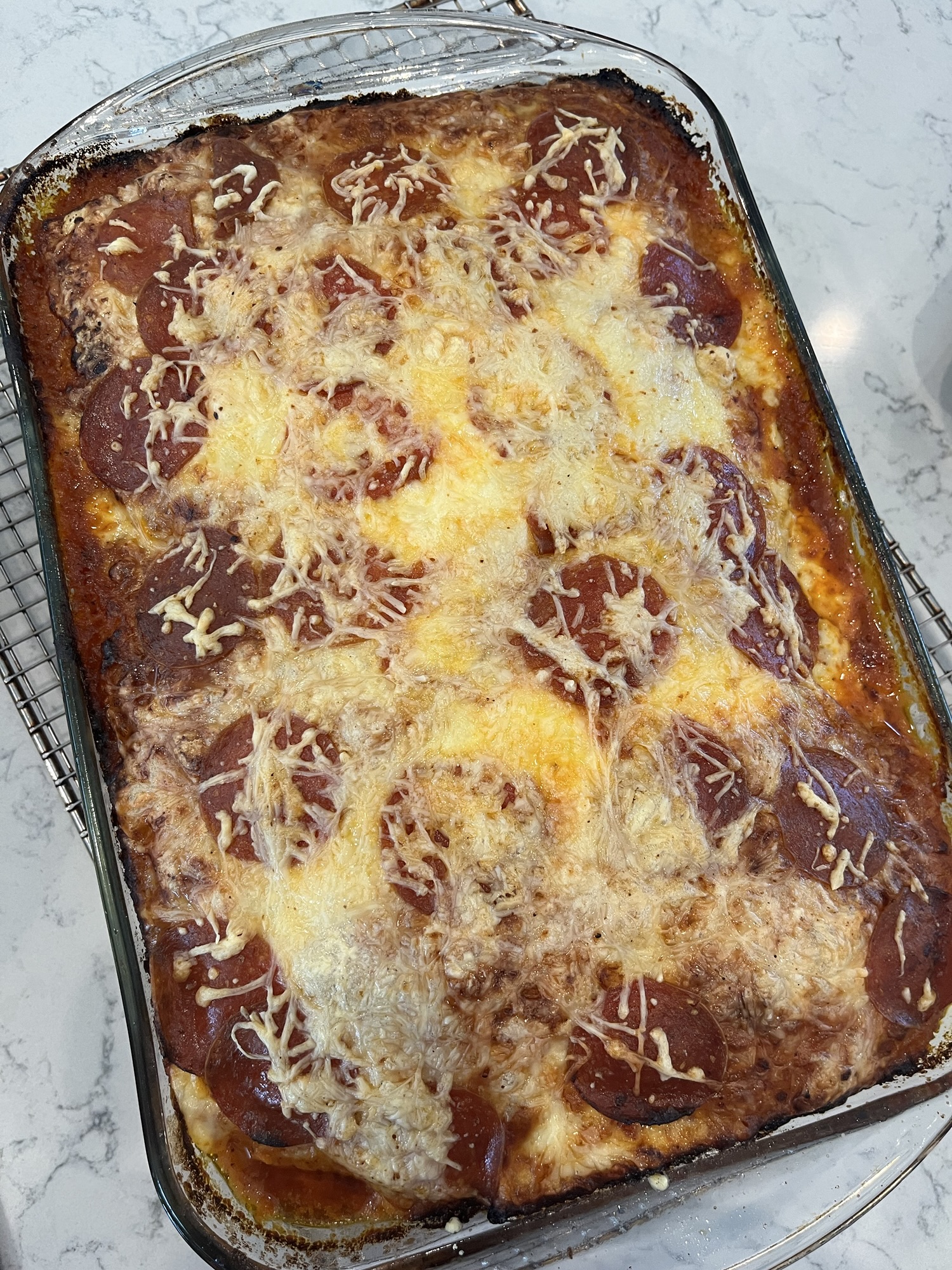
This sourdough pizza focaccia bread started as a happy accident. One day, we had some extra focaccia dough sitting around, so I tossed a little sauce, cheese, and pepperoni on top just for fun. The result was so delicious that I immediately knew I had to turn it into a full-flavored recipe. From there, I started experimenting, layering in more toppings and flavor, and the idea for this recipe was born.
The secret to taking this focaccia to the next level is tomato powder. It adds incredible depth of flavor to the dough and gives it a playful, light red color that makes every slice look as good as it tastes. Inside the dough, I fold in pepperoni, mozzarella, and roasted garlic, creating pockets of gooey, savory goodness in every bite. On top, you can pile on your favorite pizza sauce, more cheese, pepperoni, or any other toppings you love.
The end result is like a delicious mash-up of deep-dish pizza and airy sourdough focaccia. It’s perfect for a casual family dinner, a fun party snack, or anytime you want the comfort of pizza with the satisfying chew of sourdough bread. Each bite is packed with flavor, and once you try it, you’ll see why this happy accident turned into a new favorite.
Why You’ll Love This Recipe
- A fun mash-up of deep-dish pizza and fluffy sourdough focaccia—best of both worlds.
- Bursting with flavor thanks to the secret ingredient: tomato powder.
- Loaded with gooey mozzarella, savory pepperoni, and roasted garlic inside and out.
- Totally customizable—top with your favorite pizza toppings.
- Perfect for family dinners, parties, or just treating yourself to something special.
Quick Recipe Snapshot
- Prep Time: 20 minutes
- Cook Time: 25–30 minutes
- Difficulty: Medium (mostly hands-on time for shaping and layering)
- Yields: 9×13 pan (12 pieces)
- Flavor Profile: Savory, cheesy, garlicky, with a hint of tangy tomato in the dough


Ingredients
- Sourdough starter – adds natural fermentation, flavor, and chew to the focaccia.
- Bread flour – gives structure and a soft, airy texture.
- Roasted garlic – infuses the dough with rich, savory flavor.
- Italian seasoning – a blend of herbs that complements the pizza flavors perfectly.
- Mozzarella cheese – melty, gooey goodness folded into the dough and on top.
- Pepperoni – savory, slightly spicy, and packed with flavor.
- Tomato powder – the secret ingredient that adds amazing flavor and a light red color to the dough.
Equipment
No special tools required, use what you have
- Mixing bowl – for combining and kneading your dough.
- Dough whisk – makes mixing the starter, flour, and tomato powder easy and less messy.
- Rotary grater – perfect for grating mozzarella quickly and evenly.
- 9×13-inch pan – for baking your focaccia into a thick, golden, cheesy masterpiece.


Quick beginner tips
Handling high-hydration dough:
Focaccia dough is usually very soft and sticky because of its high hydration. If you get your hands wet before handling, it makes coil folds so much easier. Coil folds gently help strengthen your dough, while keeping it light and airy.
Give your dough time:
Patience is key! Let your dough rise fully in a warm, draft-free spot. Longer fermentation develops flavor, texture, and that classic sourdough tang.
Olive oil is your friend:
Coat the bottom of your pan lightly with oil. This helps prevent sticking and gives a slight crispiness to the bottom of your focaccia once baked.


Coil Folds
Coil folds are a gentle way to strengthen your dough without traditional kneading, and they’re perfect for high-hydration focaccia. Start by lightly wetting your hands so the sticky dough doesn’t cling to your fingers. Slide your hands under the center of the dough and lift it toward the top of the bowl. The dough should stretch naturally—if it tears, don’t worry, just lift a little less high next time. Let the dough fall back onto itself, folding underneath naturally to form a coil. This simple motion builds gluten and structure while keeping the dough airy and soft.
Repeat the lift-and-coil on all sides, rotating the bowl about 90 degrees each time. Take your time and keep your hands slightly wet—rushing can tear the dough, and patience here makes a big difference in the final texture. After each round of folds, cover the dough and let it rest for about 30 minutes before the next fold. This resting period helps the gluten relax and allows the dough to continue developing flavor and strength.
During the second fold, I like to fold in 30 grams of roasted garlic, 30 grams of pepperoni, and 100 grams of shredded mozzarella. Adding mix-ins at this stage ensures they’re evenly distributed throughout the dough without weighing it down or tearing it. Over the course of four folds, spaced about 30 minutes apart, your dough will become strong, elastic, and ready to be shaped into a focaccia that’s bursting with flavor and loaded with toppings. By the end, you’ll notice a light, airy texture that’s perfect for holding all the cheese, sauce, and pepperoni on top.


Sample Baking Schedule
I always like to see a sample baking schedule so I can better understand what my time commitment looks like before I start baking. So below is a sample baking schedule with an overnight cold proof.
| Day 1 9 p.m. | Feed your starter at a high ratio – 1:5:5 in the winter or 1:10:10 in the summer |
| Day 2: 9 a.m. | Mix up your dough & begin fermentolyse |
| 9:30 a.m. | Add salt and mix until everything is incorporated |
| 10:00 a.m. | Coil fold 1 |
| 10:30 a.m. | Coil fold 2 – add sliced pepperoni, roasted garlic and mozzarella cheese |
| 11:00 a.m. | Coil fold 3 |
| 11:30 a.m. | Coil fold 4 & finish bulk fermentation – allow dough to double |
| 3 p.m. | Transfer dough into oiled 9×13 pan. Gently stretch dough until it almost fills pan. Cover & place in the fridge overnight. |
| Day 3 1 p.m. | Remove from fridge and begin second rise. |
| 4:30 p.m. | Preheat your oven. Lightly oil your hands and gently dimple the dough. Top with sauce and pizza toppings. |
| 5 p.m. | Bake for 25-30 minutes until cooked through and golden. |
| 5:30 p.m. | Let cool for 10 minutes and then remove from the pan to prevent a soggy bottom. Let cool an additional 10 minutes |
| 5:45-6 p.m. | Slice and enjoy! |
Sourdough Pizza Focaccia FAQs
Why isn’t my focaccia dough rising?
If your focaccia dough isn’t rising, the most likely culprit is an inactive starter or not being patient enough. Make sure your sourdough starter is bubbly, active, and has been fed recently. Dough also needs a warm, draft-free environment to rise properly. Sometimes it just needs more time—especially in cooler kitchens. Be patient and give it a little extra rise time if needed. Remember, sourdough baking is all about patience – and focaccia is best when you push bulk fermentation as long as you can.
How do I get my focaccia soft and airy?
Soft, airy focaccia comes from the right flour, gentle handling, and proper fermentation. Use bread flour for more structure and gluten development. Don’t over-knead the dough—just enough to bring it together. Then use a series of coil folds to build strength. If you’re using all purpose flour, or a lower quality bread flour, try adding 20-25 grams of vital wheat gluten to your mixture. This will help your flour be able to absorb all the water in the high-hydration dough.
Make sure you allow it to rise fully and fold in any toppings gently to keep the dough light. A final rest after shaping before baking helps create that pillowy texture.
Why isn’t my focaccia browning evenly?
Uneven browning usually comes from oven temperature or pan choice. Make sure your oven is fully preheated before baking. Using a pan that distributes heat evenly, like a heavy-duty 9×13-inch pan, helps as well. Brushing the dough with olive oil before baking encourages a golden, crispy exterior. You can also rotate the pan halfway through baking for consistent color.
How do I prevent toppings from sinking into the dough?
To prevent toppings from sinking, fold some of your mix-ins—like pepperoni, cheese, or roasted garlic—into the dough before shaping. Save extra toppings for the top. This creates pockets of flavor throughout without weighing down the dough. Pressing them gently into the surface before baking also helps keep everything in place.
Can I make this focaccia without tomato powder?
Yes! If you don’t have tomato powder, you can easily substitute 100 grams of tomato or marinara sauce. Since the sauce adds extra liquid to the dough, you’ll want to reduce the water by the same amount—about 100 grams—to keep the dough from becoming too wet. The flavor will still be deliciously tomato-forward, though the color will be slightly lighter and the texture a bit more moist. This is a great option if you want to use what you already have on hand. Just know that the acidity from the sauce can slow down fermentation, so you may need to let it proof on the counter longer.
You can also skip the tomato powder and tomato sauce if you prefer a traditional focaccia and still top it with your favorite pizza toppings. The dough will stay white, but the herbs and roasted garlic will still give you amazing flavor.
How do I roast garlic for this focaccia, and can I use dried or powdered garlic instead?
Roasted garlic is a key flavor component in this focaccia, and it’s best made fresh for the richest, sweetest taste. To roast a full bulb, slice off the top to expose the cloves, drizzle with a little olive oil, wrap it in foil, and bake at 400°F for 30–40 minutes until soft and golden. If you’re using peeled fresh garlic, toss the cloves with a little olive oi, place them in a 9×9 baking dish and cover with foil. Roast them at the same temperature for 20–25 minutes, shaking or stirring halfway through.
It’s important not to substitute dried minced garlic or garlic powder for this recipe. The roasted garlic adds moisture, sweetness, and flavor that dried forms can’t replicate. Additionally, using dried garlic can interfere with the fermentation process of the dough, preventing it from rising properly and affecting the final texture. Roasted fresh garlic ensures both flavor and a successful, fluffy focaccia every time.
I’d love to hear what you think if you give these a try! Leave a comment below with your questions or thoughts, and don’t forget to tag me in your bakes on Instagram — I’m @NicholeBakesBread. Seeing your bakes makes my day, and I can’t wait to see your focaccia pizzas!

Pepperoni Pizza Sourdough Focaccia
Equipment
- Large Mixing Bowl
- dough whisk
- Kitchen scale
- 9×13 baking dish
Ingredients
For the Dough
- 100 grams sourdough starter active and at peak
- 425 grams water
- 10 grams tomato powder optional, but adds great flavor
- 10 grams salt
- 1 tablespoon Italian seasoning
- 500 grams bread flour
- 30 grams roasted garlic finely minced
- 30 grams pepperoni sliced
- 100 grams mozzarella cheese shredded
- 4 tablespoons olive oil for baking
For the toppings
- 350 grams shredded mozzarella
- Pepperoni measure with your heart
- Your favorite pizza sauce measure with your heart, about ½ cup
- 100 grams Fresh mozzarella optional, but delicious (reduce shredded mozzarella if also using fresh)
Instructions
Feed your start
- About 12 hours before you’re ready to mix up your bread, you’ll need to make sure to feed your sourdough starter. Feed at 1:10:10 ratio – 6 grams sourdough starter, 60 grams flour, 60 grams water. Stir well until everything is incorporated and there are no dry bits of flour remaining. Cover and place somewhere warm overnight. You can also substitute 10 grams of bubbly sourdough starter if you prefer.
Mix the Dough
- In a large mixing bowl combine 415 grams water, 100 grams active sourdough starter, 1 tablespoon Italian seasoning, 10 grams tomato powder and 500 grams of bread flour. Mix together with a dough whisk or a spoon until a sticky dough forms. Continue mixing for an additional 5 minutes to begin to develop the gluten. Cover and let rest for 30-60 minutes.
- Fermentolyse: Add the salt and remaining 10 grams of water. Use your fingers to squeeze and pinch the dough until all the salt is incorporated and you don’t feel any granules on your fingers. The dough is going to be really sticky and wet, but should stay together. If it’s too wet, you may need to add a little extra flour at this point. Cover and let rest 30 minutes before beginning coil folds.
Coil Folds
- Coil folds help strengthen your dough without traditional kneading. You’ll do a series of them over the first couple of hours of bulk fermentation.Prepare your hands: Wet your hands lightly with water. This prevents the sticky dough from sticking to your fingers.Lift the dough: Slide your hands gently under the middle of the dough.Lift the dough up toward the top of the bowl. The dough will stretch naturally — it should stretch without tearing. If it tears, lift a little less high next time.Let it coil: Once the dough is lifted, let it fall back onto itself, folding the dough underneath naturally. This creates the “coil” shape and helps build strength.Repeat on other sides: Repeat the lift-and-coil on the opposite side of the dough. Then, rotate the bowl about 90 degrees and repeat on both new sides. Keep your hands wet and work slowly — rushing can tear the dough.Rest: Cover the dough and let it rest for about 30 minutes.Coil fold #1: 30 minutes about after fermentolyseCoil fold #2: 30 minutes later. This is when I like to add the 30 grams roasted garlic, 30 grams pepperoni slices and 100 grams shredded mozzarella cheese. Adding inclusions during this stage helps to make sure they’re evenly distributed throughout the dough.Coil fold #3: 30 minutes laterCoil fold #4: 30 minutes later
- Finish bulk fermentation: Cover the dough and let rise for a couple more hours (longer in the winter when it’s cold). You’ll know the dough is ready to shape when the dough is puffed up, jiggles when you shake the bowl, has scattered bubbles visible on the sides and top. With focaccia you are looking for your dough to nearly double in size. If in doubt, let it rise longer.
- Shaping: Prepare your 9×13 baking dish by spraying with your favorite non-stick spray. Then drizzle about 2 tablespoons of olive oil into the bottom of the pan and try to evenly spread it across the bottom. Dump your dough into the baking dish and gently stretch it so it reaches the corners.
- Cold Fermentation: Cover the dough and refrigerate overnight up to 36 hours. If you want to bake the same day, you can skip this step and let the dough rise for about 2-3 hours in the pan until it’s puffed up and risen. Then bake according to recipe directions.
Day 2: Baking
- Remove pan from the fridge and let dough rise until it’s puffed up and jiggly. This will 3-5 hours, assuming your dough is about 78-80F. If your dough is cooler, this will take longer. The focaccia dough will begin to bubble up as it rises on the counter and the dough will become light and airy.
- Preheat your oven to 425 °F
- Drizzle ½ cup of pizza sauce over the top of the dough and gently dimple the dough. Be careful not to deflate the dough, just gently dimple it so it has that signature focaccia look. Start at the top of the pan and work your way down the dough until the entire focaccia is dimpled and bubbly. Be careful not to use too much sauce or the focaccia will remain soggy – less is more.
- Top with remaining pepperoni and mozzarella, or any additional toppings you like.
- Baking: Bake for about 30 minutes until baked through and internal temperature reaches 200 °F. If your cheese is getting too dark you can cover the top with tin foil while the center finishes baking.
- Once finished, let cool in the pan about 5 minutes and then carefully transfer to a wire rack to finish cooling – this keeps the bottom from getting soggy. Let cool for 15 minutes before slicing and serving. Serve with additional pizza or marinara sauce if desired.
Leave a Reply